Why Does a Frog Leap Through Your Dreams?
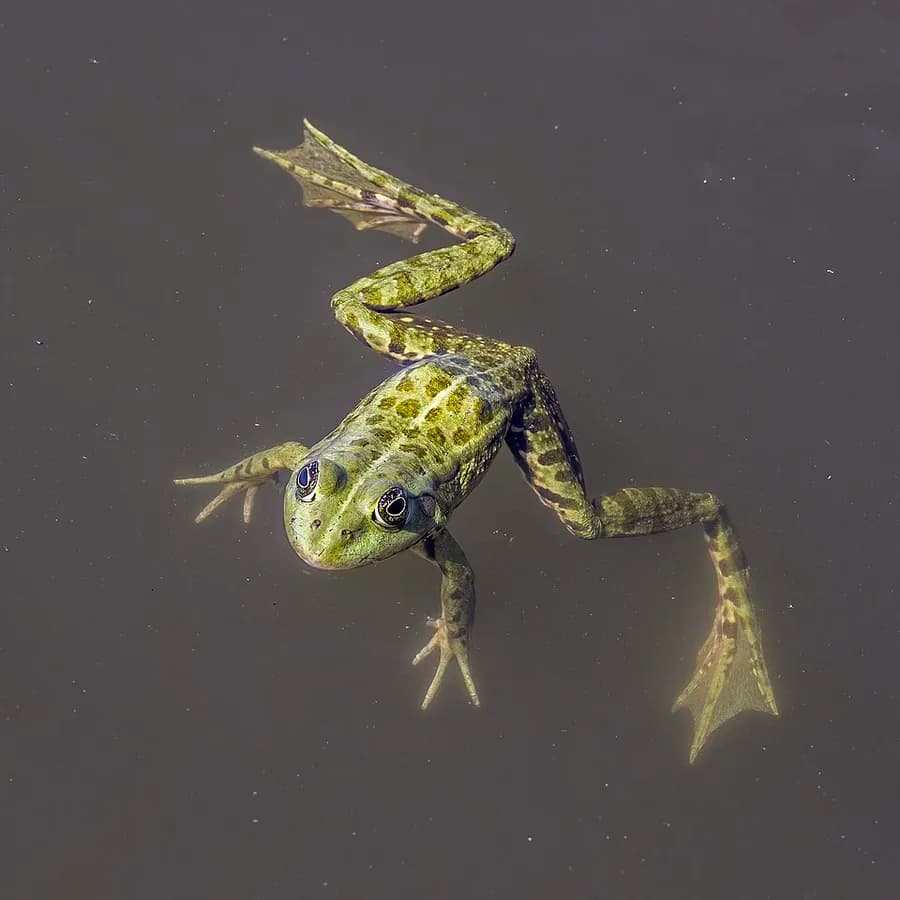
It does not roar and it does not run: it waits, motionless, then leaps. The frog occupies the edges of ponds, between two worlds, and that is precisely where dreams come looking for it. An amphibian appearing at night rarely announces a dramatic event; it rather points to a slow change, already underway for some time, whose first effects you are beginning to notice. Small animal, big message: the guide below details its symbolic, psychological and spiritual readings, then answers the most frequent questions to help you grasp what your unconscious is trying to tell you.
Symbolism and Culture
The frog ranks among the oldest symbols of fertility. In ancient Egypt, the goddess Heqet, with the body of a frog, attended women in childbirth: she was credited with the power to give the breath of life to the newborn, and small amphibian figurines were placed in tombs to accompany rebirth. Much later, European fairy tales turned this animal into a doomed prince, restored to human form through sincere commitment: the amphibian's skin there becomes the temporary shell of a true nature, revealed only by faithfulness. In the Far East, the fortune frog of feng shui, often shown holding a coin in its mouth, sits near entrances to attract prosperity to the household. Among several Native American peoples, it is linked to rain: its song was said to announce the nourishing storm that makes crops grow, which makes it a messenger of abundance. This double reading, birth and rain, shell and revelation, draws a symbol turned toward the future: wherever it appears, the frog announces that a promise awaits its hour.
Psychological Interpretation
Dream psychology finds in this amphibian a surprisingly precise image of personal growth. The tadpole that gradually loses its tail to become a frog illustrates a change in stages: you shed an old comfort, first swim in familiar waters, then discover you can breathe elsewhere. Jung would have seen in this amphibious creature a figure of mediation: straddling water and land, it connects deep feeling and concrete action, the inner world and the demands of daily life. Freud, for his part, would have paid attention to the water around it, the territory of repressed emotions: a frog stirring in a pond signals an old feeling rising back to the surface. A fleeing amphibian often translates hesitation in the face of a choice to make, while an animal leaping toward you evokes a decision ripening and demanding to be made. Its small size matters too: what seems tiny in the dream, a detail, a remark, an intuition, can trigger a considerable change once welcomed.
Spiritual Dimension
On the spiritual level, the frog is a voice of the night announcing rain. It teaches that purification does not always come through the great storm: repeated small showers are enough to make land fertile. Dreaming of it may signal that your inner life is going through a phase of discreet watering, where each small practice, short meditation, writing, a walk near water, prepares a rebirth you do not yet suspect. The amphibian's leap also carries a lesson: it does not run toward its goal, it waits for the right moment then lets itself go. Traditions read in this an invitation to trust the rhythm of existence rather than force things. Finally, its double aquatic and terrestrial life recalls that human beings too inhabit two worlds, that of emotions and that of deeds, and that the balance between the two is fed by listening. A frog dream encourages you to honor this double nature and welcome renewal when it presents itself, even if it shows up small and discreet.
Dream Situations
- A frog leaping in front of you announces a sudden opportunity that calls for a quick decision.
- Tadpoles in clear water signal a transformation at its very beginning, still fragile.
- A nighttime croak evokes an inner voice insisting on being heard.
- A frog in the house translates an emotional bond intruding into your private sphere.
- Eating a frog represents accepting an unpleasant task necessary to move forward.
- A giant frog translates a small fear grossly inflated by worry.
- A golden frog evokes luck, prosperity and a promise on its way to being fulfilled.
- A frog returning to the water suggests an emotion going back to your deepest depths.
Frequently Asked Questions
Why do people dream of frogs?
Does a frog in a dream announce a pregnancy?
What does a frog in the house mean?
What should I do if I dream of a dead frog?
Questions and Answers
Why does my frog dream keep coming back?
A recurring frog signals a slow change progressing behind the scenes. Note the emotions felt and the details of the dream: the link often appears in a project ripening, a relationship evolving or a decision you do not yet dare to make.
What does the color of the frog mean?
The shade points the way. A green or golden frog evokes vitality, luck and renewal, while a dark or pale frog refers to a repressed emotion or a blocked transformation. The context of the dream always prevails over the color.
Does a frog in a dream announce a pregnancy?
Traditionally, yes: Heqet attended births and the amphibian remains a symbol of fertility. The dream may evoke a literal birth, but also the gestation of a project, a creation or a new version of yourself.
What does dreaming of several frogs mean?
Several frogs evoke multiple simultaneous changes: several projects ripening, several emotions surfacing or several opportunities presenting themselves. Their number indicates a fertile period rather than a threat, especially if the dream feels calm.
Should I worry about a dead frog in a dream?
Not necessarily. A dead frog often signals the end of a transformation phase or a change you let fade away. The dream then invites you to check whether this ending brings relief or a renunciation worth reactivating.