What does a ghost that follows, speaks or chases in a dream mean?
Nothing crosses as many cultures carrying the same message. From the Odyssey to Pliny's houses, from the Day of the Dead offerings to the Chinese festivals of hungry ghosts, the returning dead never appear without reason: they claim a place, a burial, a word, a repair. The dream reuses this motif when an unfinished past knocks at the door: a regret that found no channel, a grief stopped halfway, or a memory that returns because it was brushed aside. This guide explores the symbolism of the ghost from ancient rites to folk traditions, its psychological and spiritual reading, then details the most frequent scenarios to connect your dream to your current situation.
Symbolism and Culture
The Odyssey gives the first scene of literary history: Elpenor, dead drunk falling from a roof, arrives first in the kingdom of the dead and asks for nothing but a burial — the ghost as an unfinished demand waiting to be honored. Pliny the Younger tells of the Athens house haunted by a specter dragging chains: the philosopher Athenodorus follows him to a buried skeleton, and the house is quiet once the burial is done — the trouble disappears when the past gets its place. In China, the festival of hungry ghosts feeds every summer the neglected souls: food offerings for those dead who receive nothing anymore, and who prowl for lack of attention. Antigone, in Sophocles, risks her life to bury her brother: the unburied soul condemned to wander, and the living duty that answers. Japan fixed the yurei, the white figure with black hair falling to the knees: the ghost of unresolved attachments, whose strength grows with the grievance. In Mexico, the Day of the Dead reverses the terror: the dead return to visit the living one night a year, welcomed by altars of flowers and sugar, the return as a feast. Dreaming of a ghost thus connects the dreamer to this tradition: the past that returns not to threaten, but to claim what was not given.
Psychological Interpretation
For Freud, the ghost illustrates the return of the repressed: what was buried without being processed, buried alive in the psyche, always ends up knocking. His text on mourning adds the key: as long as the work of mourning is not carried to the end, the lost object keeps an empty seat, and memory turns in circles instead of settling. Jung stated the other face: the dead who return in dreams often carry a debt from life, a story left half-said, an account the sleeper must settle in their name. The ghost that chases thus describes a guilt seeking its court: a regret that found no place to settle, and runs after you for lack of a hearing. The ghost one cannot see, gliding between walls, can describe lived invisibility: the feeling of existing without weighing, of being present without being seen. And speaking to a ghost in a dream signals the best of postures: listening to a part of oneself one refused to hear. The way the specter acts — threatening, mute, pleading — tells the nature of the demand: a reproach, a reminder, or a plea. What the ghost claims is almost never fear: it is the place, the word, or the end of the open account.
Spiritual Dimension
Spiritually, the ghost is the messenger of the open account: it appears when something has not been settled between the living and the dead, and its message rarely fits in words. Ancient rites understood everything: burying is not a goodbye, it is a passage — the unhonored soul wanders, the honored soul rests. The Mexican Day of the Dead makes it a liturgy: an altar is raised with the loved objects of the departed, the return is welcomed as a visit, and death loses its cold. Chinese Buddhism describes the hungry ghosts: beings with an immense belly and a tiny mouth, condemned never to be satiated — the exact image of the desire left unfinished, which grows for lack of being fed. The prayers for the dead of the Christian tradition follow the same logic: doing for the one who can no longer do, completing what remains open. And when the ghost of the dream vanishes at dawn, it joins Elpenor's burial: a settled affair, an honored debt, a memory that can finally rest. Dreaming of a ghost can therefore accompany a soothing: giving the past its place, pronouncing the word left hanging, carrying the mourning to the end. It finally invites to distinguish the haunting, which turns in circles, from the memory, which settles: the first repeats, the second lets rest.
Dream Situations
- Dreaming of a ghost haunting you signals a memory that never got its place: a past knocking at the door.
- Dreaming of speaking to a ghost evokes an undecoded message: a part of oneself one refused to hear.
- Dreaming of being chased by a ghost translates a guilt without a court: a regret running after a hearing.
- Dreaming of a benevolent ghost signals a soothed presence: a past that got its place and watches without weighing.
- Dreaming of turning into a ghost symbolizes lived invisibility: existing without weighing, being present without being seen.
- Dreaming of a ghost vanishing at dawn evokes a settled affair: an honored debt, a memory that can rest.
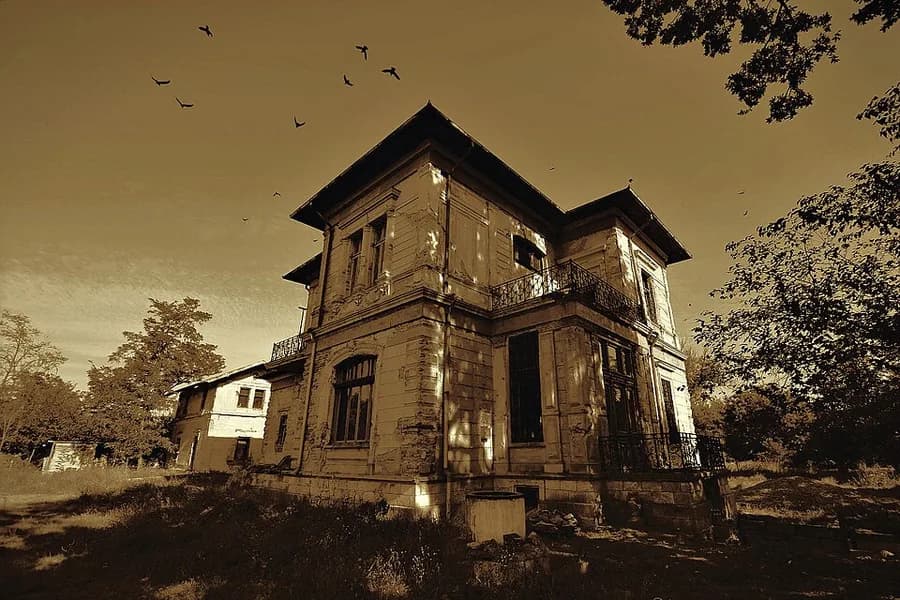
- Dreaming of a haunted house describes a past that still inhabits: a family history or a place where the account stays open.
- Dreaming of a ghost claiming something joins Elpenor and his burial: an unfinished business waiting to be honored.
Frequently Asked Questions
What does dreaming of a ghost chasing you mean?
What to say of a benevolent ghost in a dream?
Why dream of a haunted house?
What does speaking to a ghost in a dream mean?
Questions and Answers
What does dreaming of a deceased loved one appearing as a ghost mean?
The loved one returned in a dream often carries an affair left open: unspoken words, an unhonored debt, or simply the place they still hold. The dream invites you to welcome the visit and settle what lingers.
Why dream of being chased by a ghost?
The chase describes a guilt or a regret that runs after you for lack of a hearing. The dream invites you to turn around: listen to the demand rather than flee, and give the past the place it claims.
What of a ghost who speaks to you without sound?
The silent speech signals a message waiting to be decoded: an unnamed emotion, an unspoken truth. The dream invites you to translate what shows itself without letting itself be said.
Why dream of a haunted house?
The haunted house describes a past that still inhabits: a family history, an old event, a place where a debt was left open. The dream invites you to seek the room where the trouble rests.
What does dreaming of a ghost asking for something mean?
The demand joins Elpenor and his burial: an unfinished business waiting to be honored. The dream invites you to identify what can still be done — a word, a gesture, a repair — and to do it.
Why dream of a terrifying ghost?
The terror often translates the scale of the unprocessed: the more the specter frightens, the heavier the open affair. The dream invites you to defuse the fear by identifying the demand hidden behind the threat.