What does the wolf howling in your dreams mean?
The wolf fascinates because it resembles us: social without being docile, faithful without being submissive. Long hunted, it also carries the weight of collective fears, from the big bad wolf to the dark forests of folktales. When it enters a dream, it comes to question our relationship with the pack and with our own wildness. A lone wolf, a howling horde or a beast stalking you each open a different chapter. This guide helps you listen to what the wolf says about your instinct and your place among others. The wolf cannot be tamed like the dog: it always keeps a part that remains out of reach, and that is precisely what troubles us. It is a mirror held up to our civilised side.
Symbolism and Culture
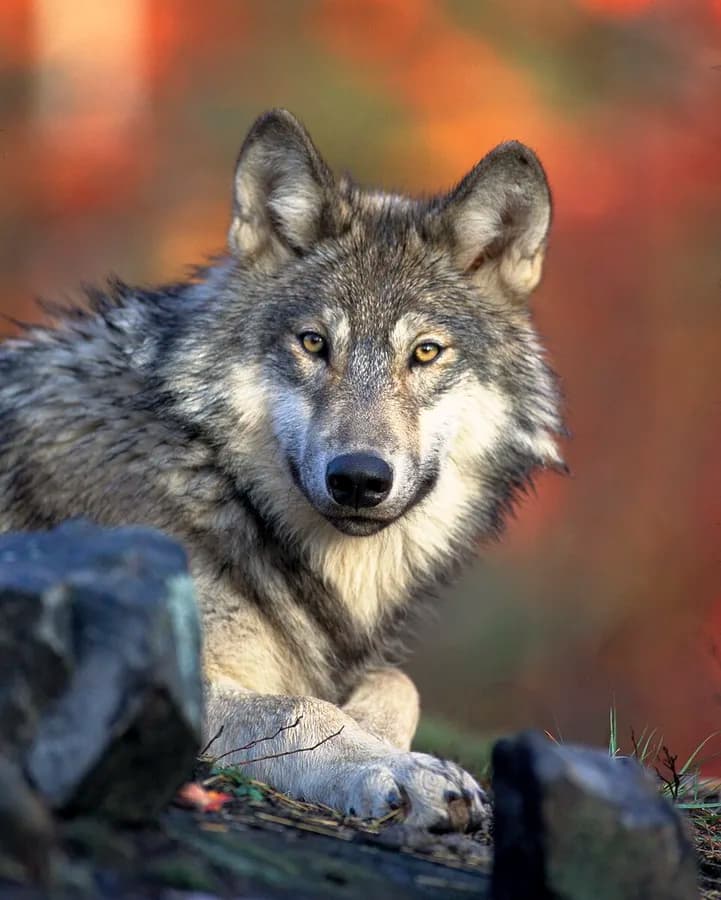
Few animals carry such a dense symbolic charge. In Norse mythology, Fenrir, the gigantic wolf son of Loki, grows until he threatens the gods themselves: he embodies brute force that finally escapes all control. Conversely, the Roman she-wolf suckled Romulus and Remus, making the wolf the nurturing ancestor of Rome and the guarantor of its power. Among many Indigenous peoples of North America, the wolf is a master hunter and a protective spirit, whose cunning and endurance inspire the clans that honour it. Between the chained beast of myth and the nurse of founders, it symbolises the permanent tension between order and the untamed part of life. In several European legends it becomes a double of man: what we project onto it ends up revealing what we refuse in ourselves. Its yellow eyes and silent step have long made it a creature of thresholds between the forest and the village.
Psychological Interpretation
Freud devoted one of his most famous analyses to the wolf: the case of the Wolf Man. An infantile phobia there became the stage for repressed anxieties, the animal condensing unspoken sexual and family fears. The wolf of dreams is therefore not merely a threat: it figures the instinct the conscious mind refuses to integrate. Jung linked it to the shadow and archaic drives, but also to the vital force that pushes us to live according to our own nature. A wolf chasing you reveals a part of yourself you are fleeing; a wolf that accepts you announces a reconciliation with your deep desires. Its place in the dream, pack leader, outcast or ally, indicates yours. Dreaming of wolf cubs can thus express instincts still tender, which need to be educated rather than repressed.
Spiritual Dimension
In shamanic traditions, the wolf is a totem animal that teaches loyalty to the clan, endurance and a sense of territory. It is the guide of initiations, the one who learns to listen before acting and to protect what matters. Dreaming of it can signal that you must defend your limits or recover a loyalty to your own path. Howling at the moon, a gesture of gathering and calling, reminds us that instinct is not blind violence but an ancient intelligence. The wolf invites us to reconcile the civilised and the wild, disowning neither. It teaches the hunter's patience: to observe long before acting, and to act only when the moment is right. Its loyalty to the pack is never blind: it rests on a recognised and honoured place.
Dream Situations
- A lone wolf in a dream symbolises independence, maturity and an accepted inner strength.
- A pack of wolves represents family, community and loyalty towards the group.
- A wolf howling at the moon evokes a call to communicate with your deep instinct.
- Being chased by a wolf indicates that you are fleeing your instincts or an old fear.
- An injured wolf reveals a secret vulnerability or an inner struggle you carry alone.
- A protective wolf suggests a need for security and the desire to defend your territory.
- Seeing a wolf watch you without attacking signals a power assessing you in silence.
Frequently Asked Questions
Why do we dream of a wolf?
Is a wolf in a dream threatening?
What does a wolf howling at the moon mean?
How should you interpret a pack of wolves?
Questions and Answers
Why does my wolf dream come back?
A recurring wolf signals an instinct or a desire for freedom you are repressing. It returns until you have found how to assert your nature without endangering yourself or hurting others.
Is a wolf chasing you a bad sign?
It is above all a call. The wolf chasing you embodies a part of you that you refuse to look at: anger, ambition, a need for rupture. Facing it in the dream, then in life, often calms its run.
What does an injured wolf mean?
An injured wolf reflects a hidden vulnerability, fatigue or a struggle carried on in silence. It can also indicate that your vital energy is wearing out defending a territory that no longer nourishes you. The dream invites you to care for yourself.
Is the wolf always solitary in dreams?
No. A lone wolf evokes independence and inner strength, while a pack speaks of belonging, family and solidarity. The two motifs can answer each other: finding your place without losing your freedom.
What does howling with the wolves mean?
Howling with the pack expresses the desire to be accepted and to share a collective energy. But the dream warns you: following the group without discernment can distance you from your own voice. It invites you to choose your alliances.