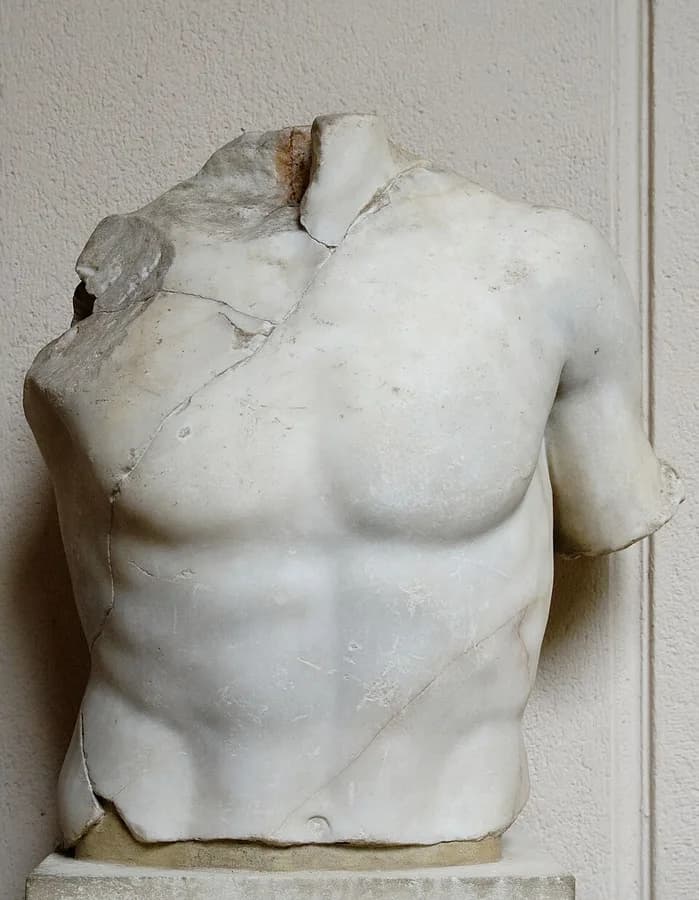
Naked in a Dream: Hidden Shame or Radical Authenticity?
You cross the street, a waiting room, a lecture hall — and your glance falls: nothing left. No clothes, no pretext, and that heat rising from stomach to ears. The dream of public nakedness is among the most universal, and for good reason: it touches the oldest social contract, the one separating what we show from what we are. Yet shame is only one of its readings. This guide crosses the symbolism of the uncovered body, its psychological and spiritual readings, then details the classic scenarios — the indifferent crowd, the general mockery, the sudden pride — to help you understand what your unconscious is exposing, exactly, and to which audience.
Symbolism and Culture
Genesis tells the birth of modesty: having tasted the fruit, the first couple notices it is naked and sews fig-leaf loincloths — the first garment in history is a mask. Greece does exactly the opposite: gymnos, 'naked', gave us gymnasium, and athletes competed there unveiled, nakedness worn as a badge of health and nobility. Diogenes the Dog pushes the logic to scandal: living in his jar, scorning every possession, he answers Alexander, who has come to ask his wishes, with a request to cast him simply less shade — the man naked of possessions cannot be robbed. Andersen completes the picture: in The Emperor's New Clothes, a ruler parades naked while a whole court insists on admiring the cloth, until a child speaks the plain truth — sometimes the mask is worn by the audience, not by the naked one. Four stories, one hinge: dreaming of being naked tests what remains of you when the social garment drops — and checks, on the dream faces, whether the world was really judging, or whether it was you, watching.
Psychological Interpretation
Jung gave the garment its technical name: the persona, the social mask worn to pass through our roles. Dreaming of being naked represents the persona failing: a new context — a promotion, an audience, a budding couple — has grown the role faster than the feeling of deserving it, and the dream lays bare the gap between costume and flesh. Freud, faithful to his dictionary, saw in dream nakedness the wish to be seen, a residue of the age — early childhood — when the body was not yet an object of modesty. Contemporary clinics map the terrain: these dreams surface at times of real exposure — public speaking, publication, a wedding — and among perfectionists who confuse being judged with being known. Two clues decide nearly everything: the crowd's reaction and yours. An indifferent audience signals that the court sits inside; mocking laughter depicts an inner critic with oversized measures. As for nakedness lived with elation, it plainly reports good news: an agreement finally signed between what you show and what you are. The useful question: what do you fear others might discover about you — and who, in your past, taught you to call it shame?
Spiritual Dimension
Spiritual traditions made nakedness a test of truth. Job says it like no one: 'Naked I came from my mother's womb, naked I shall return' — before the disaster, he lays down even the costume of the just man. Francis of Assisi plays it in public: disowned by his father before the city bishop, he returns his clothes and stands naked on the square, acknowledging only one Father — he chose to be stripped rather than live masked. Sufism drew from it a state, faqr, spiritual poverty: emptying oneself of every possession to appear bare before God alone. The Qur'an ties the two threads: it praises the garment that covers, then adds that 'the garment of piety is better' — the final garment is not made of cloth. A dream of nakedness can therefore open precise spiritual work: list what dresses you — titles, goods, roles, reputations — and ask, for each piece, whether it covers you or replaces you. The dream does not invite you to give everything up: it only asks that you know what you are when there is nothing left to wear.
Dream Situations
- Naked before an indifferent crowd: the shame lives in you, not in the eyes of others.
- Naked in a meeting or mid-presentation: the fear of being unmasked in a role still too new.
- Covering yourself in haste with whatever lies about: the desperate attempt to save a cracked façade.
- Naked without noticing, discovering it too late: a vulnerability ignored, which the dream reveals.
- Everyone clothed except you: the stubborn feeling of being the group's fragile exception.
- Naked and proud, at ease under every gaze: self-acceptance crossed, authenticity inhabited.
- Naked at home when the doorbell rings: an intimacy whose border asks to be redrawn.
- Naked before one particular person: what they alone, in your life, can truly see of you.
Frequently Asked Questions
Why does no one notice my nakedness in the dream?
Being naked and proud: is that a good sign?
Does this dream announce a secret being revealed?
Why am I the only naked one in the scene?
Questions and Answers
Why does nobody notice my nakedness in the dream?
It is the most reassuring detail of the motif: the audience's indifference sends the shame back to its real seat, your own gaze. The world has not changed its attitude; it is you judging yourself. Gently test that fear in reality: the dreaded looks rarely exist.
Everyone laughs at me in the dream: worse?
General mockery depicts an inner judge of oversized proportions, often inherited from an old scene — a humiliation at school, an exacting parent. The dream crowd merely replays that voice. Find where that laughter comes from before believing it.
Naked at work or during a talk: different meaning?
The professional setting names the stake: the fear of being unmasked in a role — competence, status, authority — you are not sure you deserve. The dream advises less preparation than the acceptance of being a visible beginner.
I am naked and perfectly at ease, even joyful: why?
It is the favourable version of the symbol: persona and person finally coincide. This dream often follows a decision of authenticity — a truth told, a mask laid down, a path chosen — and brings its quiet confirmation.
This dream has returned since a recent change: normal?
Very logical: a promotion, visibility, a couple, a publication enlarge the stage on which you are seen, and the persona must be re-stitched to the new size. The dream repeats the fitting until the role settles — it will space out once the garment is lived in.